In this article, it talks about Elie Wiesel. As Elie talks about his experience with the holocaust, and concentration camps. Its breath taking! He describes all of the hurt faces and loved ones being separated out of their own homes to be taken away to camps or workplaces. Elie also mentioned the feelings and own opinions about how the SS workers did their job and how the whole concentration camps were organized. Elie still questions himself today, asking why? why did I out of all people, why did I survive? Was it a miracle? Elie didn’t believe in asking for miracles, because he seen his own father beaten down till he was dead. After the war, Wiesel studied in Paris and then soon became a journalist in the city. In 1978, he was appointed by President Jimmy Carter as Chairman of the President’s Commission on the Holocaust.
"Holocaust History." Elie Wiesel. N.p., 11 May 2012. Web. 17 Jan. 2013.
Thursday, January 17, 2013

Tuesday, January 15, 2013
Summary of a Murder Trial
The article starts off with a quote by Benjamin B. Ferencz explaining that a world with tolerance and compassion is hard. Therefore if we do not develop law we could reenact a holocaust and wipe out everyone.
In the second paragraph of the article it states that in 1920 Benjamin was born and then 23 years later graduated from Harvard Law School. He later then joined an anti-aircraft artillery force to protect from France. After the invasion he was sent to find evidence of the crimes by Germany.
After searching for evidence he was sent to Berlin along with fifty other researchers. When they got to Berlin they saw millions of dead bodies and they called “The Worlds Biggest Murder Trial”.
During the trial twenty two defendants were guilty. Fourteen of them sentenced to death, two were sentenced to life terms, five were sentenced to 10-20 years, and four of the death sentences were carried out.
Works Cited
"Holocaust History." "The Biggest Murder Trial in History" United States Holocaust Memorial Museum, Washington, DC, 11 May 2012. Web. 15 Jan. 2013.
Antisemitism

Antisemitism. 2012. Photograph. N.p.
An example of antisemitism is when Nazi Germany and other collaborators killed Jewish people. The word antisemitism means hatred of Jews. The most common antisemitism throughout history were violent riots that were against Jews, government authorities encouraged this. There would be false rumors that Jews use the blood of Christian children to do rituals. There were political parties that were formed in Germany, France, and Austria. They made publications to spread the hatred of Jews. One of their publication was the Protocols of the Elders of Zion. In those publication, they blamed the Jews for many things. They said that Jews were unloyal citizens. When the Nazi's took over Germany, they started a economic boycott and burned all Jews books and writings. The Numberg Laws defined Jew by "blood" and they seperated "Aryans" and "non-Aryans." The Nazi's destroyed Synagogues and windows of stores owned by Jews. They did that in Germany and Austria.
"Holocaust History." Antisemitism. UNITED STATES HOLOCAUST MEMORIAL MUSEUM, WASHINGTON, DC, 11 May 2012. Web. 15 Jan. 2013.
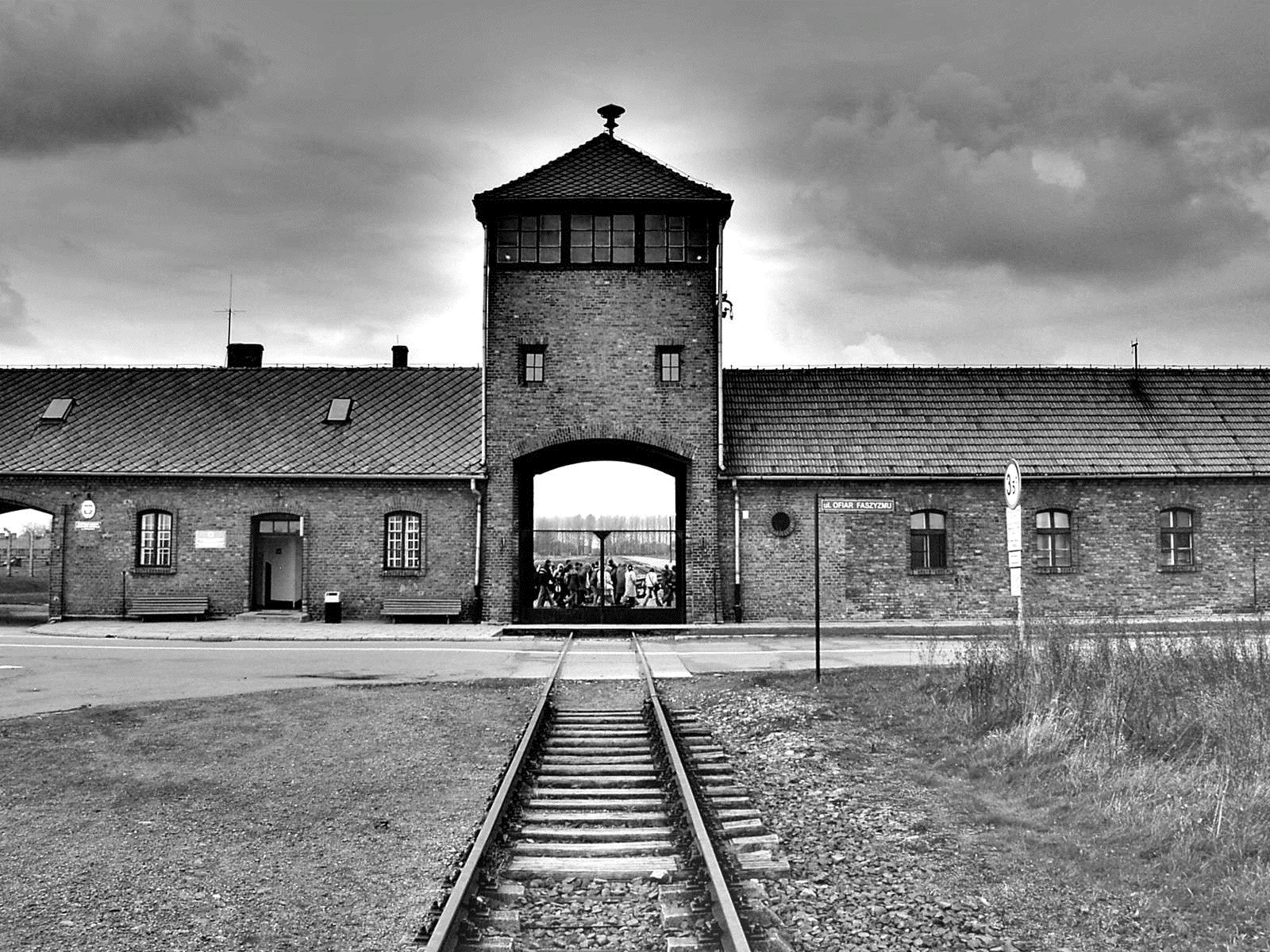
Auschwitz
 |
| Copyrighted http://isurvived.org/AUSCHWITZ_TheCamp.html |
In Word War II there was many concentration camps. but out of all the camps there is one name everybody can remember Auschwitz.
Auschwitz was the largest of all the camps; which included Auschwitz I, Auschwitz II-Birkenau, and Auschwitz III also known as Buna or Monowitz.
Auschwitz I is where all the prisoners first arrived and the selection took place. Most people didn’t make it through selection. The selection split the prisoners into two groups one group was mostly men who were able to work who was sent to work camps. The other group was women, children, infants, the elderly, the sick, and the disabled these people was deemed as not useful and was sent to straight to the gas chambers.
Auschwitz II- Birkenau is the second camp. Most deaths took place in Birkenau. This camp had a large gas chamber and crematorium.
Auschwitz III also known as Buna or Monowitz was the third camp. This cam was considered to have the strongest prisoners. This camp was mostly known as a work camp. Instead of killing the prisoners off quickly they forced them to work.
In 1944 and 1945 when Allies began to come and liberate camps the SS Officers began bombing and blowing up gas chambers and crematoriums to hide the evidence of them killing the prisoners. As the Allies got closer the officers began killing the prisoners in mass numbers. When the officers realized that the Allies were closing in on them, they got all the prisoners together and sent them on a death march to a camp in Germany which was miles away. Most died in these marches.
 |
| Copyrighted http://www.thepeoplesvoice.org/TPV3/Voices.php/2009/12/27/rudolf-hoess-commandant-of-auschwitz-the @2013 Citation Author- United States Holocaust Memorial Museum Title- Auschwitz Title of web page- United States Holocaust Memorial Museum URL-http://www.ushmm.org/wlc/en/article.php?ModuleId=10005189 Date 15 January 2013 |
Concentration Camps 1939-1942
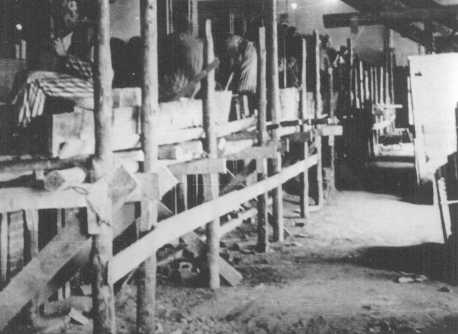
Prisoners at forced labor in a brick factory.
In the years 1939-1942 they realized that they needed to expand their concetration camps. This was the second concentration camp that they built. In September 1938 the SS authorities started to enprision them for economic profit. After the begining of the war, the concetration camps became sites for mass murders of small targeted groups. The Dutch tried to protest aginst the killig of Jews but the SS authorities shipped them to Mauthausen to have them all killed. During this period, Germans constructed gas chambers to kill large numbers of people.
Prisioners at forced labor build the Dove-Elbe canal.
Children During The Holocaust
During the Holocaust many many children were killed. They killed over a million Jewish children, children with physical and mental disabilities that were living in institutions, Polish children, and children residing in the occupied Soviet Union. In the Ghettos children died of starvation, exposure, not having clothes nor shelter. The German authorities were indifferent to this mass death, they considered the younger ghetto children to be "unproductive" and "hence". They generally selected them, illness and disabled, for the first deportations to killing centers, or as the first victims led to mas graves to be shot. When groups of Jews arrived at killing centers the majority of children were sent directly to gas chambers. Children in villages who occupied Soviet Union were killed with their parents in concentration camps. After the surrender of Nazi Germany refugees searched throughout Europe for missing children. Many surviving Jewish children fled eastern Europe as part of the mass exodus to the western zones of occupied Germany.
"Holocaust History." Children during the Holocaust. N.p., 11 May 2012. Web. 15 Jan. 2013.
"Holocaust History." Children during the Holocaust. N.p., 11 May 2012. Web. 15 Jan. 2013.
Monday, January 14, 2013
Axis Powers In World War II
Sources:
"Holocaust History." Axis Alliance in World War II. United States Holocaust Memorial Museum, 11 May 2012. Web. 15 Jan. 2013.
Hitler and Mussolini. Digital image. United States Holocaust Memorial Museum. United States Holocaust Memorial Museum, 11 May 2012. Web. 14 Jan. 2013.
COMBATING HOLOCAUST DENIAL: EVIDENCE OF THE HOLOCAUST PRESENTED AT NUREMBERG
 The piece that I read was about the different atrocities that the Nazi's performed. Many of the highest ranking Nazi's officials were put on trail for the senseless mass killings of the Jewish race. Their trails were held in Nuremberg,Germany were they were drilled hard by the International Military Tribunal (IMT) who used the Germans own records against them. Many of the officials frankly stated the number of Jews they killed with a tone of arrogance as if they were proud of their deeds. Heinrich Himmler was among many of the other officials he frankly stated that he was just following state orders when he kill over a million Jews in gas chambers.
Adolf Hitler and World War 1: 1913-1919
Hitler was known to be a very strong soldier and leader, he had been promoted to the rank of Corporal. "He had been carried along by an increasingly vicious political antisemitism promulgated by a radical right and seeping into the military during the last two years of the war". When the war was over Hitler felt devastated because he felt that he was being teared by the only community he had felt like he was home, and him returning as normal and not having a career to continue on just made him feel worse. On the year of 1919 Hitler issued his first comment that was called the so-called Jewish question in which he stated that Jews was not a religious community but a race. Ever since then he had tried to turn people against the Jews, so that they could eliminate them for once.
"ADOLF HITLER AND WORLD WAR I: 1913–1919." Http://www.ushmm.org. N.p., 11 May 2012. Web. 14 Jan. 2013. <http://www.ushmm.org/wlc/en/article.php?ModuleId=10007431>.
"ADOLF HITLER AND WORLD WAR I: 1913–1919." Http://www.ushmm.org. N.p., 11 May 2012. Web. 14 Jan. 2013. <http://www.ushmm.org/wlc/en/article.php?ModuleId=10007431>.
Battle of the Bulge
Allied powers tried to break into Germany's border, the Germans had a plan they called "Split the Rhine" they were trying to separate the US and British and force them into Northern France. The Allied forces was greatly outnumbered. The allied powers held their lines long enough for their reinforcements to get into position. Towards the end of December the German advance had not achieved what they wanted it too. With US troops and some British troops attacking the Germans from the North and South they cut out the bulge and were able defeat the Germans. The losses for the allies were about 81,000 while the germans suffered about 100,000 deaths.
Battle of the Bulge. N.d. Photograph. Web. 14 Jan. 2013. <http://www.realtimebattles.com/wp-content/uploads/2012/01/450119-Situation-Map.gif>.
United States Holocaust Memorial Museum. “The Holocaust.” Holocaust Encyclopedia.http://www.ushmm.org/wlc/en/?ModuleId=10005143. Accessed on {14 January 2013}.
Battle of the Bulge. N.d. Photograph. Web. 14 Jan. 2013. <http://www.realtimebattles.com/wp-content/uploads/2012/01/450119-Situation-Map.gif>.

United States Holocaust Memorial Museum. “The Holocaust.” Holocaust Encyclopedia.http://www.ushmm.org/wlc/en/?ModuleId=10005143. Accessed on {14 January 2013}.
Subscribe to:
Comments (Atom)